

Michael Chekhov technique
Actor presence and imagination
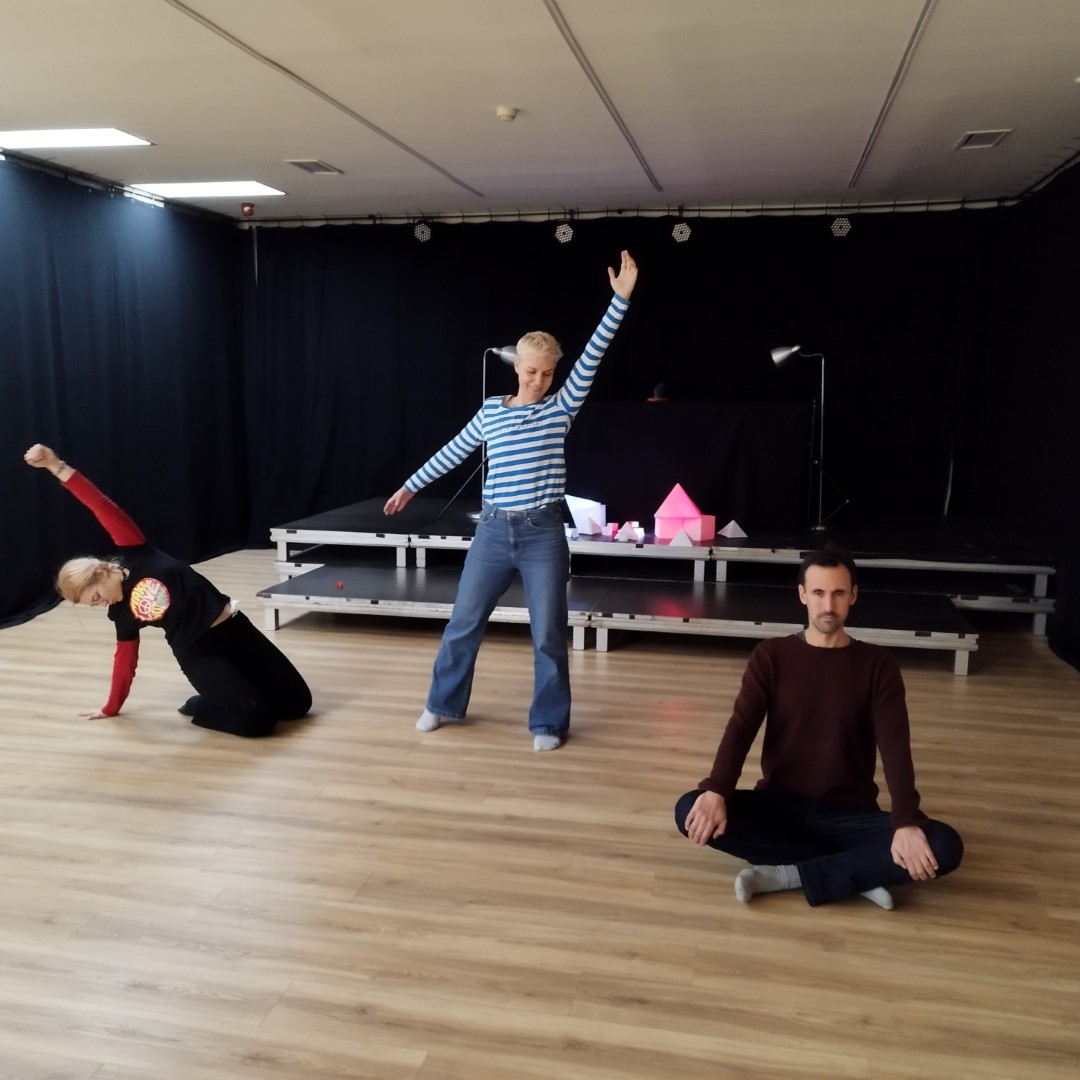
The Chekhov technique focuses on the capacity of the actor's imagination and physical presence.
Its tools: the "psychophysical gesture", the three centers of the body (will, feeling, thinking), their reciprocal interaction, and the conscious application of imagination.
"It is not a question of how talented we are, but of what our obstacles are. If we try to increase our talent, we will meet many disappointments. There is nothing to increase! The question is how to unlock the secret room where our genius lies." – Michael Chekhov
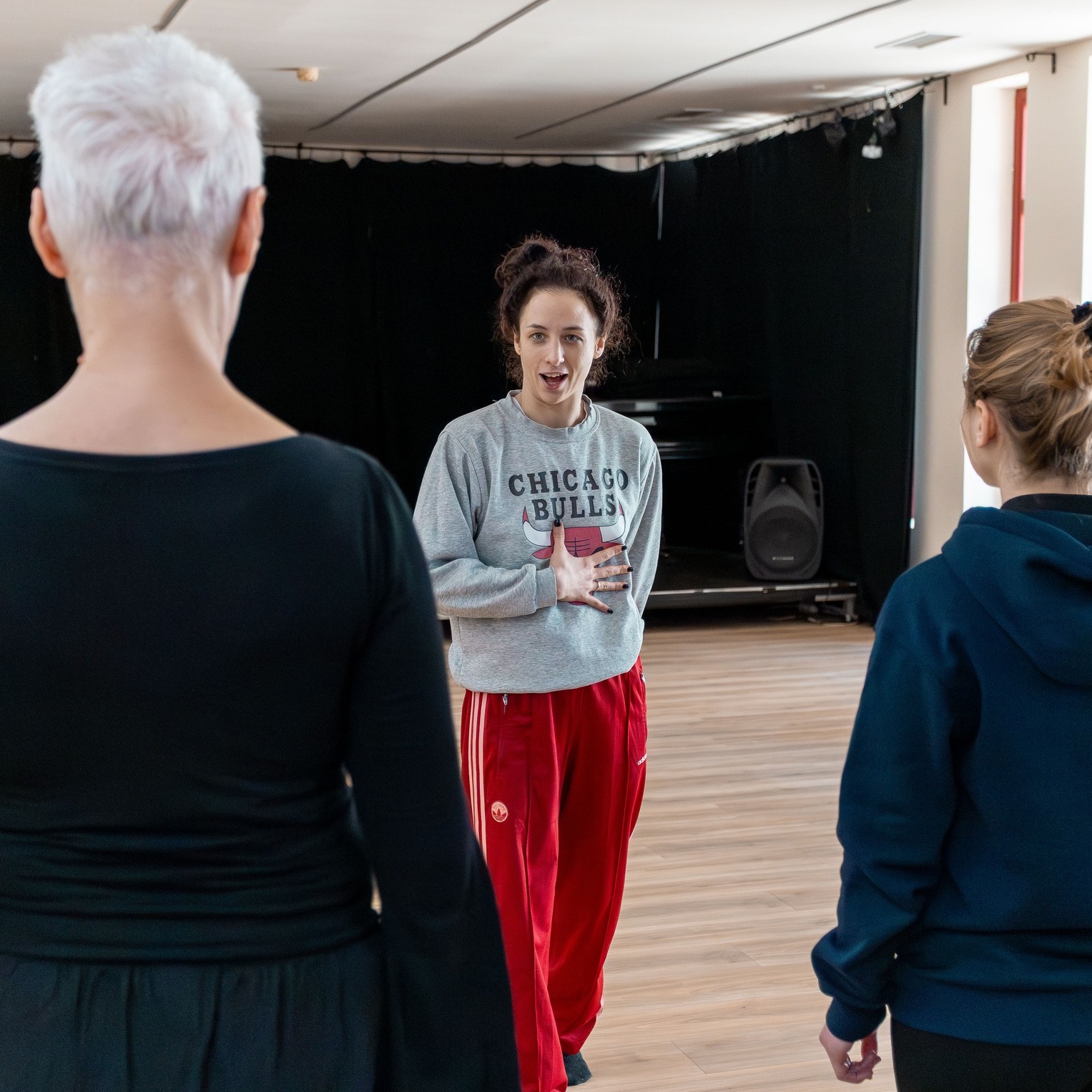
Psychological Gesture
Michael Chekhov: On the Technique of Acting
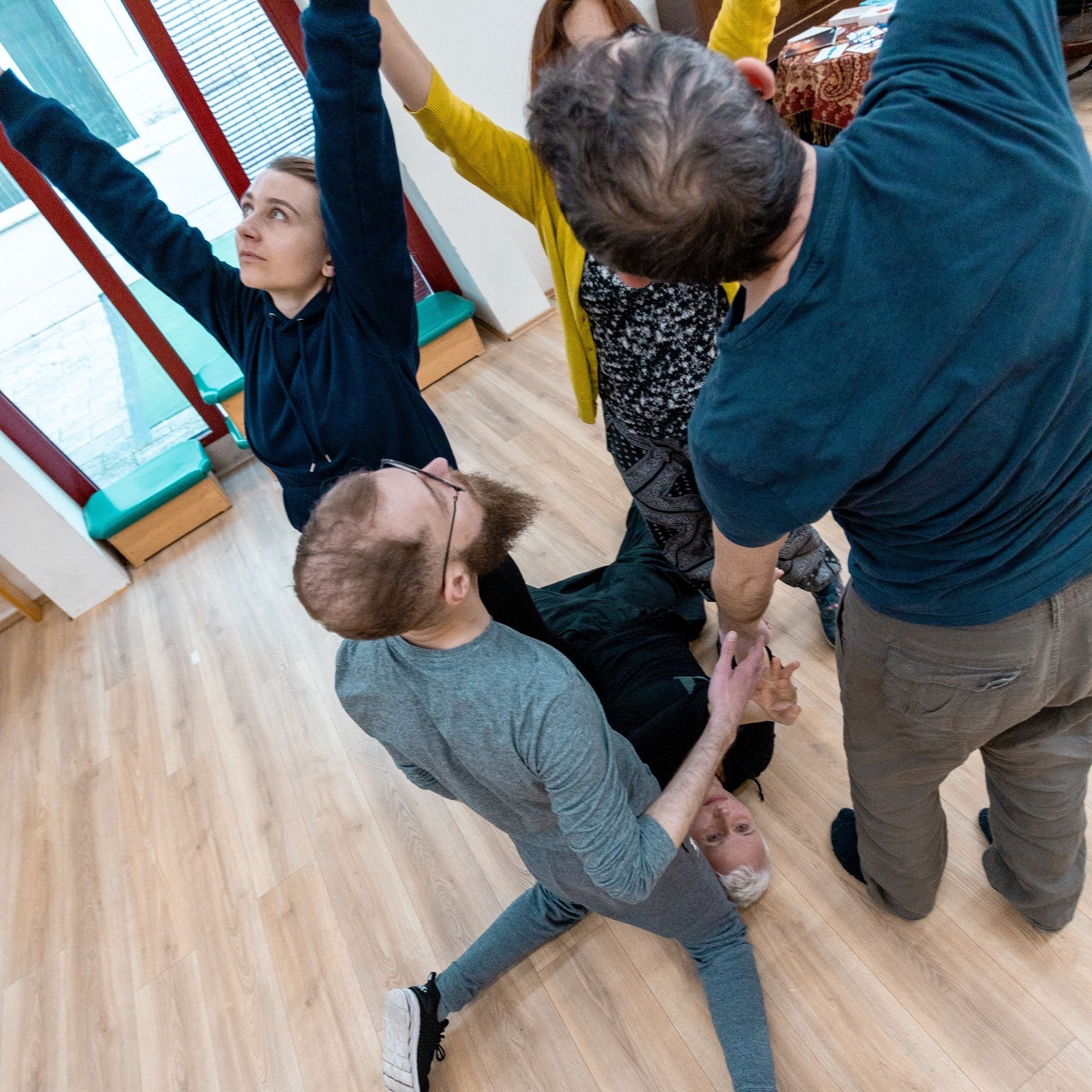
"The movement that embodies the psychology and Aim of the character. Executed using the actor's entire body with the greatest intensity, it gives the actor the basic structure of the character, and at the same time is capable of placing the actor into the various moods required by the script."
Trainings
Information — dates- Acting video collection workshop
- Masterclass – actor on stage
- Fundamentals of Character Building
- Dance and Its Gesture
- Pantomime Art and the Psychological Gesture
- Vocal Training and Its Gesture
- Rhythm and Its Gesture
- Light and Its Gesture
- Co-Arts Trainings
- Movie Acting Masterclass®
- Open Workshop
- Gesture Art Guided Tour®
- Michael Chekhov Coaching®
- Kripta (theatre creative workshop)
Videos from the atelier
Practical demonstrations and technique showcases based on Michael Chekhov Acting Technique®

Psychological (Psychophysical) Gesture – Poem-Dialogue
Psychological (psychophysical) gesture in practice – Michael Chekhov Acting Studio Hungary

Michael Chekhov Studio at Kettőspont Theatre and Spiritual Atelier Autumn 2023
Creative atelier Autumn 2023 – Michael Chekhov Acting Studio – Levente Turóczi
Vocal Training and Its Gesture
Speech Technique & Michael Chekhov Acting Technique®

Dance and Its Gesture – Video: Anikó Nánási
Dance as nonverbal language & Michael Chekhov Acting Technique®

The Death of the Magician – Michael Chekhov Studio – Work Demonstration
Kripta – theatre creative workshop presentation

Kripta – Theatre Creative Workshop
Contemporary theatre creative workshop Budapest
The Michael Chekhov Technique Method in Edit Katalin Huszthy's Doctoral Dissertation
Michael Chekhov technique in the dissertation of the Assistant Lecturer at the Department of Civil Engineering, University of Debrecen
During the period between 2021 and 2022, Edit Katalin Huszthy, assistant lecturer at the Department of Civil Engineering, University of Debrecen, in connection with the theses of her doctoral dissertation, completed the Fundamentals of Character Building – Michael Chekhov Acting Technique® course series.
With heartfelt gratitude, I thank her for making the discovery, perception, and shapability of Atmosphere, Psychological Gesture, Attitude, Center, and Composition present for everyone through her active participation;
as well as for participating as a creator in shaping objects, environment, and set design through hands-on discoveries during the two-day co-arts training Light and Its Gesture – Object and Light Animation & Michael Chekhov Acting Technique®.
It is a particular honour that she cites these exercises in her doctoral dissertation as proof of her theses on the shapability of space purely through the power of imagination.
Quoting the aforementioned section in full:
"The exact same thing unfolds during movement through space. In his course built upon the Michael Chekhov method, Levente Turóczi developed a practice of imaginative techniques through which he directs attention to the atmosphere-generating possibilities of the relationship between space and the people moving within it. A space is not only mappable and understandable through movement within it; the very sight, movement, and position of the body define it. Therefore, while pre-planned static playing spaces constrict, spaces shaped improvisatively during play foster the interaction between the environment and performers, thereby enhancing the possibilities of atmosphere creation. In alignment with this manner of performing method, the foundation of design work is not developing a vision tied to a specific theme, but surveying the space and understanding its mood. The group trainings aimed at this include exercises directed toward simple spatial interventions, realised through movement improvisation exercises such as walking in determined directions and qualities, directed ball throwing, or precisely determining each other's positions. This is followed by the formation of free associations and the search for analogies while becoming acquainted with the space's atmosphere and transformations, as well as establishing connections between the space and colours, shapes, movement qualities, and behavioural modes. Afterwards, as a kind of subjective surveying work, the goal is shaping various gestures that also appear in lasting form within the space. During the exercises, the directions and focal centres of the given space are identified, providing the basis for spatial intervention."
Of the theses presented, the 8th and the 6th relate specifically to the possibilities offered by the Michael Chekhov technique:
Proceeding from the above, I arrived at the proposition that the scenographer's activity can be directed not only towards shaping the stage setting, but also towards creating the conditions and tools of performing work and surveying visual alternatives arising as a consequence of stage presence. In parallel, the creation of scenic visuality can be interpreted in close connection with actor improvisation, as a fine-arts creative process carried out open-stage 'here and now'.
The intertwining of different artistic disciplines, as well as the transformation of the relationship between performers, audience, and stage space, allows the designer's work to encompass not merely visual appearance, but in connection with this, stage somatic effects as well. Auditory, tactile, olfactory, and potentially oral stimuli are inseparable parts of space and thus of the playing space, influencing the visual experience as well."
The article was also published with identical content on the website of the Hungarian Academy of Arts Research Institute of Art Theory and Methodology

All-encompassing expertise
All-encompassing expertise combined with a safe, supportive atmosphere. I was enriched with experiences and insights that are truly unique and special.
You know that feeling after trying a new kind of movement: 'Wait, I have a muscle there too?' After a Chekhov course, that was exactly how I marveled at my mental muscles. Sometimes the realization hit in the moment, sometimes as a delayed effect in everyday life...
During the training you receive something intangible that liberates you, no matter which tree ring of life you are currently on — at the base, at the top, or right in the middle...
Why do I recommend it? Because you cannot imagine in advance what you will receive here. And when you finally do, you feel you have been enriched by something extraordinary, something entirely new...
My Collaborating Partners
Speech Technique
Speech therapist – special education teacher specialising in speech therapy
MA in Theatre Studies
Certified MA in Hungarian Language and Literature and secondary school teacher
Speech trainer
MATE Kaposvár Campus Institute of Arts, Acting Department – assistant lecturer
Speech therapy, further training for speech therapists and speech technique courses for children and adults